Skip to content
- I have no idea about this radio stuff, I don’t want to talk on the radio when I don’t know what I’m doing. What should I do?
- The reason for this net is to teach and train folks on using the radio. Just hop on there and give it a try. Unlike posting on social media, you are not going to get attacked with nasty anonymous “you idiot” comments. Everyone has had a first time of keying up the microphone, forgetting their callsign, or asking basic questions about something — it’s part of learning. Now to be fair, if I personally know you I’m going to harass you [Misty] 🙂
- How much will it cost me to get into this?
- If you already have an FRS radio (typically found at Walmart/Target/Sportsman stores) then you are all set to go! Just tune in to channel 16 and turn off any privacy codes/tones.
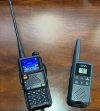
- If you don’t have a radio, you can get a good GMRS radio for under $50. I’ve used the Baofeng UV-5G and UV-5G Plus. Both work well and are inexpensive. They usually come with everything you need, even programming cables if you want to use your computer to update them. In addition to a GMRS radio, you need to be licensed to operate it. The cost is $35 for a 10-year license which all your immediate family can use (children, spouses, parents). Just like with any hobby, you can get deep into it and buy all kinds of different toys which bring the costs up. For talking around Lake Holiday and joining the net, you can easily be online for under $75 between a radio and your license.
- I want to get a radio, any suggestions?
- A few GMRS radios I have used and are good
- Baofeng UV-5G Plus – Has a nice large screen, charges with USB C. (~$30)
- Baofeng UV-5G – Charges with a cradle. (~$50 for a pair)
- Radioddity DB25-G – This is not a handheld radio, but a base station for home or radio for a vehicle. You also need to purchase an antenna for this radio. (~$100 for radio, ~$50 for antenna)
- If you are looking at a GMRS radio, below are specs to consider. Most modern GMRS radios have all these features.
- Must-haves
- At least 5W of power output.
- Repeater support
- CTCSS – Continuous Tone-Coded Squelch System
- Supports channel 16
- Should-haves
- DCS – Digital Coded Squelch – Some repeaters use this instead of CTCSS
- Nice-to-haves
- CHIRP or other programming options. It’s nice to be able to setup the radio via computer/phone.
- Stay-away radios
- The BTECH GMRS-50V2 – This radio has some known issues where it “blanks out” and stops receiving for 3-5 seconds. I had this radio for about a month and sent it back.
- If you are getting an FRS radio, it must be able to transmit on channel 16. FRS has no options for repeaters or programming.
- I see radios have different power capabilities, 5 Watt, 25 Watt, 50 Watt. If I get a 50W radio it will have 10 times more signal strength and distance than a 5W radio, right?
- It would intuitively seem that way, but nope. Radio signal strength is rated in decibels (dB). 6dB is equates to 1 bar of signal strength on the radio. So if you are transmitting and have 12dB of signal strength, you would see 2 full bars on the receiving radio. As the receiver moves further away the bars would drop (signal strength gets weaker). The relationship between decibels (dB) and how much power (watts) the radio outputs are not one-to-one. Going from 5W to 50W does not take you from say 12dB to 120dB (10x). You need to DOUBLE the power to get 3dB of signal strength. So if we take a 5W radio vs a 50W radio: 5W to 10W = 3dB, 10W to 20W = 3dB, 20W to 40W = 3dB, 40W to 50W = 1dB. This mean a 50W radio only has 10dB (3+3+3+1) more signal strength than a 5W radio… so not even 2 full bars worth of signal even though you are running 10 times the power! The return on the investment for the higher power usually is not there. A cheap 50W radio will run you $275. Spending that much to get less than 2 bars of signal strength usually isn’t worth it. Although it theoretically gives you further distance for communicating, other factors such as geography have much more of a practical impact. Hills, buildings and even the earth’s curvature has more impact on distance of travel. In real-world testing here at Lake Holiday, we tested to see how far signals would reach from my truck’s radio to someone transmitting on a handheld outside their home. We had nearly perfect reception at 5W until I reached the crossing of 522 and 37 (about 10 miles away). I was “on the edge” of making contact. We could make out some words but the transmission became broken. Whether I was using 5W, 20W, or 50W the ability to make contact was the same. This is because it was not the signal power that was limiting, it was the terrain between us limiting communications.
- TLDR; 5-25W of power is plenty for communicating around Lake Holiday. Your location (down in a valley vs up on a hill) will have more impact on your communication distance than the power of your radio.
- Do I need a license to join in on the Lake Holiday Radio Net?
- Depends. If you have purchased a GMRS radio, then yes, you do need to get a license. There is no test for the license, you must sign up on the FCC website. The cost is $35 for a 10-year license. All members of your family can use this callsign (children, spouses, parents) even if they do not live in the same household. Most of Lake Holiday can be reached with a GMRS hand held radio. You can find info on getting a license under the “Links” area.
- If you have an FRS radio, a license is not needed. The FRS radios are much lower power. Although they will work your range is significantly limited.
- Are there age restrictions to join the Net?
- Nope! Anyone of any age can join in the fun. I think getting kids involved is a great way to give them new experiences and skills.
- If I have a callsign and am using a GMRS radio, do I really need to say it?
- Yes. Identifying your station by the callsign is a requirement of the FCC if you are using the more powerful and capable GMRS radios. This is even more important when repeaters are used which greatly increase the range of the radios.
- What are the rules about identifying with a callsign?
- A callsign should be given on your first transmission when talking on a given frequency.
- Your callsign should be given once every 15 minutes while actively in a conversation.
- Your callsign should be given on your last transmission before you stop a conversation.
- What if I have multiple family members using the same callsign, how do we properly identify our station?
- There are a few ways to do it:
- Use the callsign followed by your name. “This is WSDZ724 Steve”, “This is WSDZ724 Jadon”
- Assign a “unit” or “station” number/letter to each person:
- “WSDZ724 Unit 1” – Steve
- “WSDZ724 Unit 2” – Jadon (son)
- “WSKW749 Unit A”
- “WSKW749 Unit B”
- “WSKW780 Station 1”
- “WSKW780 Station 2”
- “WSGA497 Station A”
- “WSGA497 Station B”
- Pick the method you like best.
- If I want to call another station on a frequency, what is the typical way to do it?
- Normally if you want to reach another station that has a callsign, you typically say their callsign/name followed by yours. If I was trying to reach Misty, I would say “WSGA497 Misty this is WSDZ724 Steve.”
- If you don’t know the person’s callsign, you can also do something like “Misty this is WSDZ724 Steve, are you there?”
- No matter how you call for someone, you do need to use your callsign to adhere to the “ID on first transmission” rule.
- If the person does not respond below are typical responses:
- “Nothing Heard, this is WSDZ724 Steve CLEAR” – I didn’t hear them, if I’m going off frequency
- “Nothing Heard, this is WSDZ724 Steve listening” – I didn’t hear them, I’m hanging around available to chat
- What if I just want to let people know I’m out there listening, available to chat?
- Typical ways to let folks know you are on frequency:
- “WSDZ724 Steve listening”
- “WSDZ724 Steve monitoring”
- “WSDZ724 Steve mobile” – This means I’m in my car or boat.
- “WSDZ724 Steve mobile on the lake” – This clarifies I’m in my boat.
- What if I want to find someone to talk to?
- If you want to actively find someone to talk to, you can call “CQ CQ This is WSDZ724 Steve” “CQ” means “calling any station.”
- What if I have an life-threatening emergency and need to make contact with someone?
- If you are the station with an emergency
- Start with “EMERGENCY EMERGENCY EMERGENCY” (this could also be MAYDAY MAYDAY MAYDAY which is the international standard).
- Continue with “This is [callsign/name] [callsign/name] [callsign/name]” – your identification is repeated 3 times to help receiving stations pick up who is asking for help.
- Continue with: “I have an emergency. My position is [give your location]. The emergency is [give short, clear description of the emergency]. I need [medical help/rescue/authorities]“
- Listen for someone to respond. If no response, repeat the process. Just because you don’t heard a response doesn’t mean someone did not hear you. The radio path may not be great depending on your location. Passing all the information, even if you are not sure someone heard is important.
- Do not speak too fast. Although in emergency situations it is difficult to stay calm, keeping a slower pace helps the receiving station copy your information.
- If you are a station hearing an emergency call
- Acknowledge the station when they finish transmitting.
- Clarify any details you may have missed, writing them down is best
- Get their name/callsign
- Get their location (this could be GPS, landmarks, or specific locations e.g. “the clubhouse” “East side of the lake”)
- Get the nature of the emergency (medical issue, boating accident)
- Clarify what help they need (medical, rescue, authorities)
- Let the station know you got their message
- Relay message as necessary (call 911)
- Stay on frequency and in contact for updates.
- You radio guys use a bunch of terms I’ve not heard before, can you let me know some common ones?
- There are a number of different short-hands that have come about from the early days of radio communications. Below are some common ones used.
- “CLEAR” or “OUT” – This typically means you are no longer going to be on the channel/frequency listening.
- “ROGER” or “COPY” – This means I have received your message. Note – it does not mean “Yes” which is a common misunderstanding. “Can you bring over a can of soda?” “ROGER.” would not be a correct response. “Yes” or “AFFIRMATIVE” would be more appropriate, or “You don’t need another soda.”
- “73” – Best regards, usually at the end of a transmission. “Good talking to you, 73 WSDZ724” or “This is WSDZ724, 73. I’ll be CLEAR” – These are common ways to say “Best regards” and ends with your callsign included to adhere to identification rules when you are done with a conversation.
- “HT” – Handheld Transceiver. This is a “walkie talkie” type radio. Sometimes called a “handie-talkie”
- “QTH” – Your location.
- In this day and age with the Internet and cell phones, why would I bother with this radio stuff?
- For one, it’s fun!
- Although we are highly connected in today’s world, we talk to each other less. This provides some real person-to-person interaction and a great way to meet new people.
- Internet and cell phone services are not something that are guaranteed to be available. Although we typically see few extended outages with these services, nearly everything runs on data networks. Our phone communications, email, social media, even our television programming. Cyber attacks, CMEs (Coronal Mass Ejections) from the sun, or natural disasters can take these systems offline. This is not just “theoretical.” We had a near miss in July of 2012. Had the CME on the sun erupted 9 days sooner, much of our digital and electrical infrastructure would have been offline for an extended amount of time. You can read more about the July 2012 super storm. Storms like this and the well known Carrington Event of 1859 can have real consequences on our modern communication and power infrastructure. Using these radios requires no Internet or other infrastructure. Communication is direct and person-to-person. For those of us that were born in the 1900s we remember a time when instant communication was not possible. For those growing up in the Internet age, think how you would get information and communicate if phone, texting, and Internet were completely offline. Most of us would be in total isolation if we lost these services.
- Ok, I have a radio so if bad stuff happens I can communicate. Why check in to this net regularly?
- Besides gaining comfort in communicating via radio, the net provides a way to catch operational issues, equipment problems, and technical issues. In an emergency situation, anyone can hop into a car to drive you to the hospital… do you want that to be the first time the person drives a car and the car hasn’t been started for 6 months? Keeping up on communication skills and regularly exercising your radio equipment makes sure when you need it, it works.
- Should I only talk on this channel for the net?
- No. Hop on and chat away! Ideally this becomes the place folks go to for radio community communications.
- I’ve heard people talk about “Repeaters.” What are Repeaters? What are Repeaters? What are Repeaters? …
- A repeater is a radio setup that repeats what it hears. They are usually setup with high quality antennas and radios. They listen on one frequency and re-transmit everything it hears on another frequency, “repeating.” Repeaters are usually located in a high location and run at higher power levels. This gives the repeater a large range to both hear and transmit signals out. The advantage is you can use a small handheld radio running at lower power levels and have a very large area you can reach. For example, there is a repeater located about 7 miles south of Lake Holiday. That repeater reaches from Berkley Springs down to Front Royal! With the radio in my truck which has an external antenna attached, I was able to reach the repeater all the way to the Pennsylvania line! There is another repeater called the Blue Mountain Repeater which covers north of Martinsburg to south of Culpeper. Once you have your GMRS license, you can login to the MyGMRS.com website (in “Links” area) and view repeaters in the area. Repeater usage is another advantage of having a GMRS license. Repeaters cannot be used by FRS radios.
- Steve, are you one of those end-of-world-prepper guys, ready for chaos and zombies?
- LOL. No. I am someone who understands computer security, networking infrastructure, communications, and the vulnerabilities in those systems. I’ve also worked as a volunteer communicator for a county Emergency Operations Center and know some of the scenarios that are of concern to those agencies. I see having these skills as more of a “backup” if our core infrastructure is ever compromised, either maliciously or from natural disasters. I’m also a bit of a nerd, so I find this stuff fun… 🙂
- I got some more questions, can I talk to someone?
- Absolutely. You can reach out to me via:
- Radio on channel 16 (if I’m home I’m listening). Call for “Steve” or if you want to be fancy “WSDZ724 Steve”
- Facebook Messenger – Steven Randlett
- Email steve@k8srr.com (I’m really bad about checking email, so the other two options are much better).